


October 30, 2026
Choosing Church Cross Dimensions for Your Church Building
Choosing the right size for a church cross takes a little planning. A cross that looks right on a small church may be too small for a tall steeple or a wide exterior wall. The distance from which people see it also matters.
Before choosing a cross, look at the building, the place where the cross will be mounted and the space available for installation. These details will give you a better idea of which church cross dimensions to consider. They will also make it easier to compare different cross models and find one that suits your church.
Why Church Cross Dimensions Matter
A church cross is one of the first features people notice when they approach a building. Its size affects how clearly it stands out and how well it fits the surrounding architecture. Taking time to choose the right dimensions can make a real difference to the finished appearance.
Keeping the Cross Proportional to the Building
The cross should look like it belongs on the building. A small cross on a tall steeple may be hard to see from the ground. On the other hand, a very large cross on a narrow wall can take attention away from the rest of the church.
Look at the area around the planned mounting point. Consider the width of the wall, the height of the steeple and the shape of the roofline. These features provide a useful starting point when comparing cross sizes.
There is no single size that works for every church. Two buildings of the same height may have different roof shapes, wall widths and architectural details. The right choice depends on the building as a whole.
Making the Cross Visible From the Ground
A cross may look large enough when viewed from a ladder or from a photograph taken nearby. From the street, however, it may be much harder to see. Viewing distance should be part of the decision from the start.
Think about where people will see the cross most often. They may approach the church from a main road, walk through the parking area or enter from the side of the building. Trees, nearby buildings and other features can also affect visibility.
If possible, take photographs of the church from several distances. These images can help you discuss the proposed size and position with your cross supplier before placing an order.
How to Choose Church Cross Dimension for Different Mounting Locations
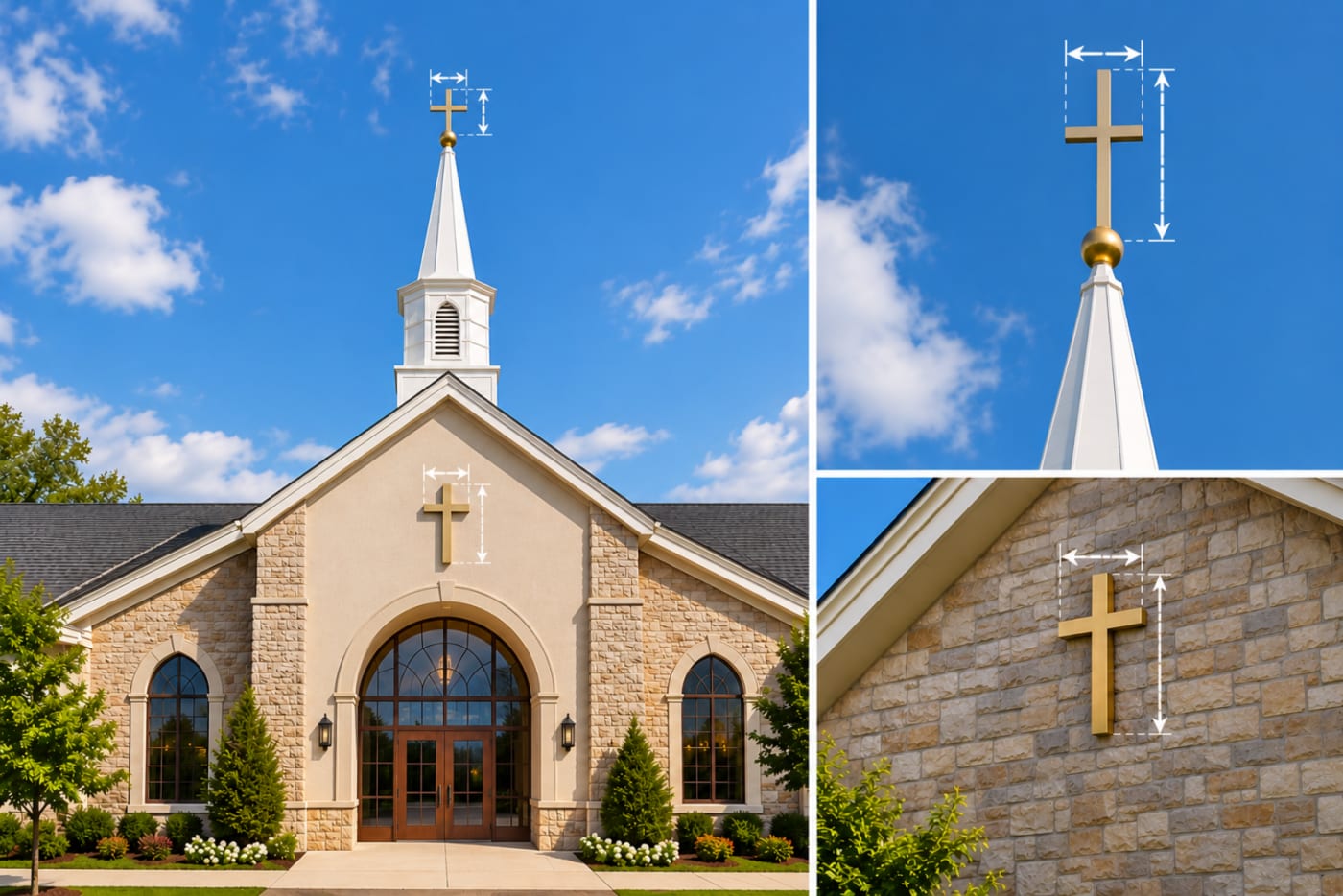
The mounting location is one of the first things to settle when choosing church cross dimensions. A Christian cross at the top of a steeple has a different setting from one fixed to an exterior wall. Each location calls for its own measurements and checks.
Cross Dimensions for Church Steeples
A steeple cross sits high above the main building, where it can often be seen from a considerable distance. Its size should suit the shape and dimensions of the spire below it.
Look at the width of the spire near the top and the point where the cross will be attached. If the design includes a steeple ball, take that part of the assembly into account as well. The cross, ball and spire should form a balanced assembly when viewed from the ground.
A cross for a new steeple should be considered during the design stage. This gives the people responsible for the building a chance to check the dimensions and mounting details before the parts are made and installed.
For an existing steeple, begin by recording the available measurements. The supplier can then review the proposed size alongside the mounting requirements. Do not choose a cross based on the height of the steeple alone.
Cross Dimensions for Exterior Church Walls
Wall-mounted Christian crosses are often placed on the front of a church or on a prominent side wall. The available wall space plays a major part in choosing the right size.
Measure the area around the planned location. Pay attention to windows, doors, trim and other features that may limit the space. A cross should be easy to see without crowding nearby architectural details.
Also consider how far the cross will sit from the wall. Fiberglass Unlimited includes mounting brackets with its crosses to hold them off the wall. The amount of projection can affect the finished appearance, so check the product details before making a decision.
The wall itself matters, too. Its construction and condition must suit the proposed mounting method. A qualified installer should check the attachment points and confirm that the wall can carry the cross safely.
Cross Dimensions for Tall Church Towers and Entrance Areas
Some churches have towers or prominent entrance areas that provide another suitable place for a cross. These locations may be lower than a steeple but still visible from the street or parking area.
Look at the available space and the height of the mounting point. A cross above an entrance should fit the area without interfering with nearby windows, roof edges or other features. On a tower, the width of the face and the distance from which people view it will help determine the size.
The viewing angle is worth checking as well. A cross that looks well placed from directly in front may appear different when seen from the side. Photographs taken from the main approach to the church can help you judge the proposed location.
How to Measure for the Right Church Cross Size
Before comparing products, gather a few measurements of the building and the intended mounting area. You do not need to settle on a particular model at this stage. The aim is to give yourself and the supplier enough information to discuss suitable options.
Measure the Available Mounting Area
Start with the height and width of the space where the cross will go. Record any nearby features that could affect its position, including windows, roof edges and decorative trim.
For a steeple cross, measure the relevant section of the spire and identify the intended attachment point. If the cross will replace an existing one, record its dimensions and note any problems with its current size or position.
Take photographs from both close up and farther away. Measurements show how much space is available, while photographs provide a clearer picture of the building's appearance.
Consider the Cross Height and Width Together
A cross's height tells only part of the story. Its width also affects how it looks on a building. Two crosses with similar heights can have different proportions, so compare both measurements when reviewing products.
Check the manufacturer's listed dimensions carefully. Product pages may use terms such as length, width and height to describe different parts of a cross. Make sure you know which measurement refers to the overall size and which describes its depth or projection.
Product drawings are useful when available. They can show the shape and dimensions more clearly than a photograph alone. If a measurement is unclear, ask the supplier to confirm it before ordering.
Check the Viewing Distance
Once you have the measurements, look at the church from the places where people are most likely to see the cross. Stand across the street or at the far end of the parking area. If the church sits near a main road, consider the view from the approach.
Check for anything that might block the cross from view. Trees, neighboring buildings and parts of the church itself can affect how much of it people see.
Photographs are great for comparing possible sizes and positions. Share them with the supplier along with your measurements. This gives both sides a clearer starting point for choosing a suitable model.
What Cross Proportions Work Best for a Church Building
The overall shape of a cross or crucifix affects how it appears on a building. Height and width matter, but so does the relationship between the vertical and horizontal sections.
Traditional Cross Shapes and Their Proportions
Traditional crosses differ in the length of the upright section and the position and width of the crossbar. These differences affect the overall outline and the way each model looks from a distance.
A taller, narrower cross will have a different appearance from one with a wider crossbar, even if their overall heights are similar. Neither shape is automatically the better choice. The decision should take the building's proportions and the church's preferences into account.
When reviewing models, compare the full dimensions and look at the product drawings.
Matching the Cross to the Church Architecture
A cross should suit the building where it will be installed. Look at the shape of the roof, the size of the facade and the other features around the mounting point.
An elaborate steeple may call for a cross that fits its shape and detailing. A broad exterior wall offers room for a larger wall-mounted cross. A smaller entrance area calls for a more modest size.
Other Factors to Consider When Selecting Church Cross Dimensions
Dimensions are an important part of choosing a cross, but they should not be considered on their own. Weight, mounting requirements, outdoor exposure and lighting can all affect which product is suitable for a particular location.
Weight and Mounting Requirements
Larger crosses usually weigh more than smaller models, which affects how they must be attached to the building. The mounting surface, brackets and attachment points all need to suit the selected cross.
Check the approximate weight listed on the product page. Then confirm the mounting requirements with the supplier and a qualified installer. The wall or steeple must be able to carry the cross safely, including the loads it may experience outdoors.
Outdoor Exposure and Cross Materials
An exterior church cross needs to withstand the conditions at its mounting location. Rain, wind, sun and changes in temperature are all worth considering, particularly when the cross will be installed high above the ground.
We make our wall crosses from fiberglass that can be used indoors or outdoors. This gives churches an option for exterior installations where weather exposure is a concern.
The intended location still matters. Review the product specifications and installation details for the model you are considering. If the cross will sit on an exposed steeple or tower, discuss the conditions at the site with the supplier before settling on a size.
Lighting and Cross Visibility at Night
Some churches want their cross to remain visible after dark. In that case, lighting is worth considering alongside the cross dimensions and mounting position.
Think about the location and how the light will appear from the street or parking area. Also check the electrical connection and installation requirements before ordering. If lighting is part of the plan, confirm that the selected cross and mounting arrangement suit the intended setup.
Church Cross Dimensions Available From Fiberglass Unlimited
Once you have a clearer idea of the mounting location and available space, you can compare actual products. Fiberglass Unlimited offers steeple crosses and wall-mounted crosses for church buildings. The wall-cross collection includes models in several sizes, making it possible to compare dimensions and approximate weights.
For example, the SC-4 wall cross lists a length of 4 feet, a width of 2 feet 6 inches and an approximate weight of 20 pounds. The SC-6 wall cross lists a length of 6 feet, a width of 3 feet 5 inches and an approximate weight of 35 pounds. The larger SC-10 wall cross lists a length of 10 feet, a width of 5 feet and an approximate weight of 60 pounds.
These examples show why it is worth comparing the full product details. As the listed dimensions increase, the approximate weight increases as well. That difference may affect the mounting requirements and the amount of space needed on the building.
Before choosing a model, check its listed dimensions, weight and available options. Confirm any measurements you are unsure about, particularly if the cross will be installed on an existing steeple or wall. You can review the available models in the Fiberglass Unlimited church crosses collection.
Find the Right Church Cross for Your Building
The right church cross should suit the building, fit the intended mounting area and remain visible from the places where people will see it. Start with the measurements, consider the cross's proportions and check the mounting requirements before making a final choice.
If you are comparing sizes for a steeple or exterior wall, review the product specifications and gather photographs of the proposed location. These details will make it easier to discuss the available options and find a cross that fits your church.
If you need help choosing dimensions for your building, contact our team to discuss your measurements and installation plans.
FAQs
How do I choose a cross for a church with an unusual roofline?
Start by looking at the roof shape and finding a mounting location where the cross will remain visible. Take measurements and photographs from different angles, especially if the roof has several peaks or steep slopes.
Should a replacement church cross match the original dimensions?
Matching the original dimensions can be a good choice if the existing cross suits the building. However, a renovation or change to the roofline can make a different size more suitable.
How much clearance should there be around a church cross?
The space needed around a cross depends on its size, mounting system and location. Leave enough room to keep it clear of nearby windows, roof edges and other architectural features.
Can a church cross be too small for a historic church building?
Yes, a small cross may be difficult to see against a large historic church, particularly from the street. The building's age does not determine the right size on its own. Consider the height of the steeple, the width of the facade and the architectural details surrounding the cross.
How far should a church cross extend above the top of a steeple?
There is no fixed distance that works for every steeple. The right height depends on the spire's shape, the cross dimensions, the design of the complete assembly, etc.