


January 22, 2026
A baptistry is more than a functional element inside a church. It is a focal point used during meaningful moments, often in front of a congregation. Maintaining it properly preserves both its appearance and its durability. Regular cleaning reflects care for the space and respect for its significance.
Fiberglass baptistries are designed to make this responsibility easier. Their smooth, sealed surfaces reduce many of the maintenance challenges found in older or more traditional baptistry materials. Still, proper cleaning matters. Understanding how to clean a fiberglass baptistry correctly helps keep it in good condition for years of use.
This guide focuses entirely on fiberglass baptistries: how they behave, how they should be cleaned and why their material advantages simplify long-term care.
Fiberglass Baptistries 101
Fiberglass is a composite material made by reinforcing resin with glass fibers. In fiberglass baptistry construction, this creates a strong, lightweight structure with a smooth, non-porous surface. Unlike materials that rely on coatings or sealants alone, fiberglass is finished as part of its manufacturing process.
For churches, this means the baptistry surface resists moisture absorption, staining and surface breakdown. The result is a structure that holds its appearance while requiring less intensive upkeep over time.
How Fiberglass Differs From Other Baptistries
Traditional baptistries are often built from tile, concrete, or metal. Each of these materials presents cleaning challenges:
Tile baptistries rely on grout lines, which can discolor, crack, retain residue, etc.
Concrete baptistries are porous by nature and often require sealing to reduce staining
Stainless steel baptistries can show water spots, scratches and chemical reactions if cleaned improperly
Fiberglass avoids these issues because of a continuous surface with no exposed pores and no corrosion risk. This makes cleaning way easier and reduces the likelihood of long-term surface damage.
How Often Should a Fiberglass Baptistry be Cleaned?
Keeping a fiberglass baptistry clean helps preserve both its appearance and longevity. How often you clean it depends on regular use and the type of cleaning required. Some tasks are simple and should be done after every use, while others are more intensive and needed only periodically. In any case, it is a much simpler process than church steeple cleaning.
Routine Cleaning vs. Deep Cleaning
Routine cleaning should take place after each use. You should drain, rinse, and wipe down the interior to remove water residue and surface buildup.
Deep cleaning is less frequent and focuses on removing mineral deposits, soap residue or light staining that can develop over time. For most churches, this is only needed periodically rather than after every baptism. If you use a baptistry heater, the warmer water can accelerate soap and mineral deposits along waterlines, making occasional deep cleaning slightly more important than in unheated baptistries.
Factors That Affect Cleaning Frequency
Several factors influence how often deeper cleaning is required:
Frequency of baptisms
Local water hardness and mineral content
Indoor humidity and ventilation
Whether the baptistry is covered when not in use
Fiberglass handles all of these variables well, but consistent light maintenance will always reduce the need for heavier cleaning later.
What You'll Need Before You Start
Before you start cleaning, it's helpful to gather the right supplies. Using the proper tools is the way to make sure the surface is cleaned effectively without risk of damage.
Recommended Cleaning Supplies for Fiberglass
Cleaning a fiberglass baptistry does not require specialized tools. In most cases, you will need:
Soft microfiber cloths or non-abrasive sponges
Warm water
A mild, non-abrasive cleaner approved for fiberglass or composite surfaces
These materials are sufficient for both routine and deeper cleaning when used properly. The presence of a baptistry heater doesn’t require new tools, but it does make rinsing and drying particularly important.
Cleaning Products to Avoid on Fiberglass
Certain products can damage fiberglass finishes over time and should be avoided:
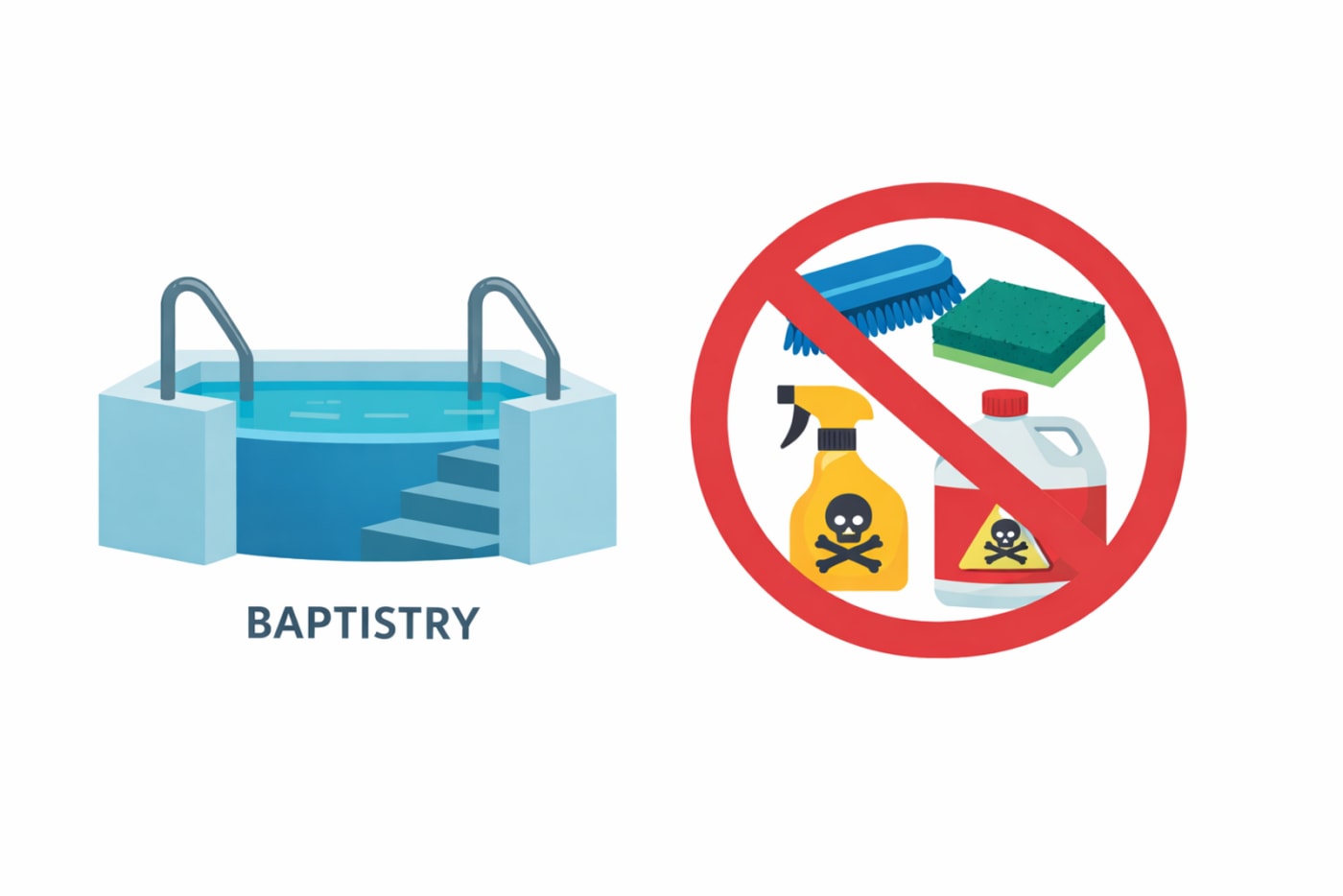
Abrasive powders or scouring pads
Undiluted bleach or strong acids
Industrial cleaners not intended for composite surfaces
These products may scratch, dull, or weaken the surface, even if damage is not immediately visible.
Step-by-Step: How to Clean a Fiberglass Baptistry
Cleaning a fiberglass baptistry is simple when approached methodically.
Step 1: Drain and Inspect the Baptistry
Begin by fully draining the baptistry. Once empty, inspect the surface for visible residue, water lines, buildup and similar. That way you will find (if there are) areas that may need extra attention during cleaning.
Step 2: Rinse the Interior Surface
Use warm water to rinse the entire interior. This removes loose debris and prevents grit from being spread across the surface during wiping or scrubbing.
Step 3: Apply a Mild Cleaner
Apply a small amount of mild cleaner using a soft cloth or sponge. Avoid pouring cleaner directly onto the surface. Instead, work in sections to maintain control and avoid overuse.
Step 4: Gently Clean the Surface
Using light pressure, wipe the surface in smooth, overlapping motions. Focus on areas where water tends to sit or where contact is most frequent. Fiberglass does not require aggressive scrubbing to clean effectively.
Step 5: Thoroughly Rinse and Dry
Rinse the surface thoroughly to remove all cleaning residue. Drying with a soft cloth prevents water spotting, especially in areas with hard water.
Removing Common Baptistry Stains (Fiberglass-Specific)
Even well-maintained fiberglass can develop stains over time. But don't worry, these stains can be removed without harming the finish.
Hard Water and Mineral Deposits: Mineral deposits can form at water lines when water evaporates. Fiberglass resists mineral bonding better than porous materials, making these deposits easier to remove. Gentle cleaning with a mild solution is typically sufficient.
Soap Residue and Body Oils: Soap residue and natural oils accumulate with repeated use. These residues sit on the surface rather than soaking in, which allows them to be removed without harsh chemicals.
Discoloration From Standing Water: Standing water can leave faint marks over time. Draining and drying after use is the most effective prevention, but light discoloration can be removed with routine cleaning, too.
Disinfecting a Fiberglass Baptistry Safely
There are times when cleaning alone is not enough and disinfecting becomes necessary.
Disinfection may be appropriate after extended periods of non-use, before large services, or when local guidelines require it. It should not replace routine cleaning but complement it when needed.
Use diluted, non-corrosive disinfectants that are compatible with fiberglass surfaces. Apply evenly, let it sit for some time and rinse thoroughly to avoid residue.
Preventive Maintenance Tips for Long-Term Care
Routine cleaning is just one part of keeping a fiberglass baptistry in top condition. Simple preventive measures can greatly reduce the effort required for future maintenance and extend the life of the installation.
These are the simple habits that keep cleaning easy:
Drain the baptistry completely after use
Wipe down surfaces before storing
Use a cover to prevent dust accumulation
These habits significantly reduce cleaning time and preserve the finish.
When to Consider Professional Help or Replacement
Even with regular cleaning and maintenance, there may come a time when a fiberglass baptistry requires professional attention or replacement. If you recognize these moments early, you will prevent more extensive damage and reduce maintenance costs.
Cleaning may no longer be sufficient if you notice:
Structural issues like cracks, warping, weakened supports, etc
Persistent surface wear that cannot be removed with gentle cleaning or polishing
Outdated design or installation that no longer meets the church's functional or aesthetic needs
At this point, continued cleaning may only provide temporary improvement or not even that. We can help you assess whether repair, refurbishment or full replacement is the most effective approach.
Professionals can also address issues that are not visible to the untrained eye, such as internal support concerns or hidden waterline damage, guaranteeing that the baptistry remains fully functional and safe.
Keeping a Fiberglass Baptistry Clean
Cleaning a fiberglass baptistry does not need to be complicated. With the right approach and materials, churches can maintain a clean, respectful space and preserve the baptistry's condition long-term.
Fiberglass offers clear advantages in durability and ease of care. When cleaned correctly and maintained consistently, it remains a dependable part of the church environment, ready for use whenever it is needed.
If you have questions about caring for a fiberglass baptistry or are planning a new installation, contact Fiberglass Unlimited today and let us help you.
Frequently Asked Questions
Can a fiberglass baptistry be cleaned with standard church janitorial supplies?
Yes, in most cases both regular and portable baptistry can, as long as those supplies are mild and non-abrasive. Fiberglass does not require specialty chemicals to stay clean, which is one of its practical advantages. The key is avoiding anything gritty or overly harsh.
Is it safe to use vinegar, baking soda or natural cleaners on a fiberglass pool?
In diluted form, some natural cleaners can be used, but caution is still important. Vinegar is acidic and repeated use can dull the finish over time if not rinsed thoroughly. Occasional use is generally fine, but it should not become the primary cleaning method.
Can pressure washers be used on fiberglass baptistries?
No, pressure washers are not recommended. The force can damage the surface, edges or seals, even though the fiberglass itself is durable. Gentle cleaning methods are more than sufficient and far safer.
Are fiberglass baptistries affected by chlorine or treated water?
Fiberglass handles treated water well when exposure is reasonable and followed by proper rinsing. Long-term standing water with high chemical concentration can leave residue, but it rarely causes structural issues. Regular draining and cleaning prevent most problems.
Can baptismal pools be polished after cleaning?
Light polishing is possible, but it should be done cautiously and infrequently. Most fiberglass baptistries do not need polishing if they are cleaned correctly from the start. Over-polishing can do more harm than good.
How do you clean fiberglass baptistry steps or seating areas safely?
These areas should be cleaned with the same approach as the main basin. Pay attention to corners and edges where residue may collect. Non-slip textures should be cleaned carefully to avoid buildup without scrubbing aggressively.